Truck Driver self-service Check-in Kiosks
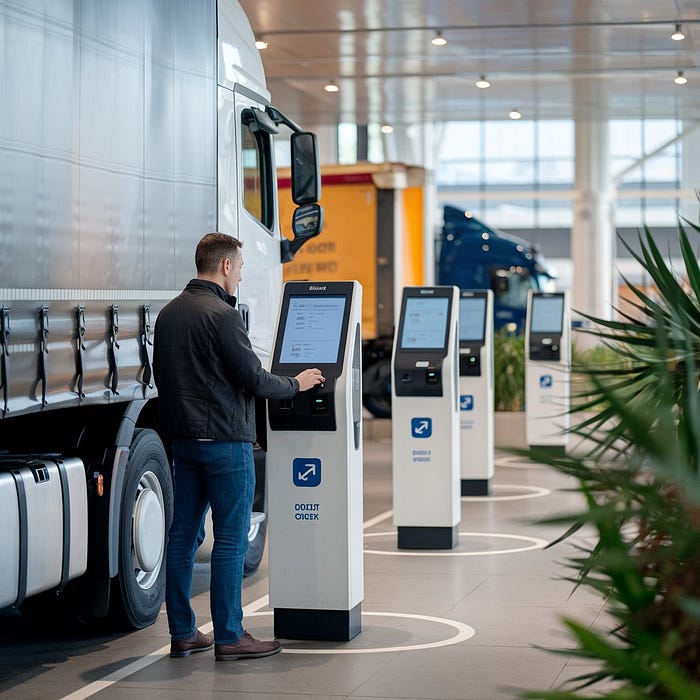
In the fast-paced world of logistics and transportation, efficiency is the key to smooth operations. One of the most significant technological advancements in recent years is the introduction of self-service check-in kiosks for truck drivers. These kiosks are revolutionizing the industry by streamlining processes, reducing operational costs, and enhancing the overall experience for drivers and logistics companies alike. With an increasing demand for automation and digital transformation, self-service kiosks are becoming an essential component of modern freight facilities. This blog post explores the benefits, technology, implementation, and future of self-service check-in kiosks in the transportation industry.
Benefits of Self-Service Check-In Kiosks for Truck Drivers
Efficiency and Speed
One of the primary advantages of self-service check-in kiosks is their ability to improve efficiency and speed at logistics hubs. Traditionally, truck drivers have had to wait in long queues to manually check in with security personnel or administrative staff. This process is not only time-consuming but also prone to errors and delays.
With self-service kiosks, truck drivers can complete their check-in process within minutes. These kiosks use touch-screen interfaces, barcode scanners, and automated identification systems to quickly verify driver credentials, vehicle information, and delivery details. This reduces congestion at check-in points, allowing drivers to proceed with their deliveries without unnecessary delays.
Cost-Effectiveness
For logistics companies, the implementation of self-service check-in kiosks translates to significant cost savings. Traditional check-in systems require a dedicated workforce to manage truck arrivals and departures. By automating the check-in process, companies can reduce their reliance on human labor, cutting down on operational costs.
Furthermore, self-service kiosks minimize errors associated with manual data entry, reducing the need for rework and administrative oversight. The long-term return on investment (ROI) of kiosks is substantial, as they provide a cost-efficient and scalable solution to managing high truck volumes.
Enhanced User Experience
Truck drivers often face long working hours and tight schedules, making a smooth check-in process crucial to their overall experience. Self-service kiosks offer a user-friendly interface that allows drivers to complete their check-in swiftly and with minimal complications.
These kiosks are designed with intuitive navigation, multiple language options, and accessibility features to accommodate diverse user needs. Additionally, digital receipts and real-time notifications keep drivers informed about their check-in status, further improving their experience.
Technology Behind Self-Service Check-In Kiosks
Hardware Components
Self-service check-in kiosks consist of several key hardware components that enable seamless functionality:
- Touchscreens: Provide an interactive and user-friendly interface for drivers to input their details.
- Barcode Scanners: Allow quick scanning of driver licenses, vehicle registration documents, and QR codes.
- Card Readers: Facilitate identity verification and secure access control.
- Printers: Generate receipts and gate passes for drivers upon successful check-in.
- Cameras and Sensors: Enhance security by capturing real-time images and monitoring access points.
Software Integration
The software powering self-service check-in kiosks plays a crucial role in ensuring smooth operations. These kiosks are integrated with advanced logistics management systems, enabling real-time data exchange between drivers, fleet managers, and warehouse staff.
Key software features include:
- Cloud-Based Databases: Store and retrieve driver and vehicle information securely.
- AI-Powered Verification: Utilize machine learning algorithms for identity authentication.
- Real-Time Communication: Send automated notifications and updates to drivers and staff.
- Customization Options: Allow logistics companies to tailor kiosk functionalities to their specific needs.

Implementation of Kiosks in Freight Facilities
Assessing Your Needs
Before implementing self-service check-in kiosks, logistics companies must assess their specific requirements. Factors to consider include:
- Traffic Volume: Analyzing the number of trucks arriving daily to determine the necessary number of kiosks.
- Integration with Existing Systems: Ensuring compatibility with current fleet management software.
- Security Measures: Identifying authentication protocols for access control.
- Customization Needs: Defining specific functionalities required for different types of cargo.
Installation and Maintenance
Successful implementation involves a well-planned installation and maintenance strategy.
- Installation Process: Includes setting up kiosks at designated entry points, configuring software, and testing system functionality.
- Employee Training: Logistics staff should be trained on kiosk operations and troubleshooting techniques.
- Routine Maintenance: Regular software updates and hardware inspections are necessary to ensure smooth operation and security compliance.
- Technical Support: Having a dedicated support team to address any technical issues that arise.
The Future of Self-Service Kiosks in the Transportation Industry
Integration with Mobile Technology
As mobile technology continues to advance, self-service check-in kiosks are expected to integrate seamlessly with smartphone applications.
- Mobile Pre-Check-In: Drivers can complete their check-in via mobile apps before arriving at the facility.
- QR Code Scanning: Mobile-generated QR codes can be scanned at kiosks for a contactless check-in experience.
- Real-Time Updates: Notifications about queue status, available parking spots, and gate assignments can be sent directly to drivers’ mobile devices.
Adoption of AI and Automation
Artificial intelligence (AI) and automation are set to play a significant role in enhancing kiosk functionalities.
- Facial Recognition: AI-driven facial recognition can improve security and expedite the authentication process.
- Automated Assistance: Virtual assistants can provide real-time support to drivers through voice commands and chatbots.
- Predictive Analytics: AI-powered analytics can forecast peak hours and optimize check-in operations accordingly.
Conclusion
Self-service check-in kiosks are transforming the trucking industry by enhancing efficiency, reducing costs, and improving user experience. These kiosks leverage cutting-edge technology, including advanced hardware and software integration, to streamline operations at freight facilities.
For logistics companies, investing in self-service kiosks is a strategic move towards automation and digital transformation. With the potential integration of mobile technology, AI, and automation, the future of self-service check-in kiosks looks promising. As the industry continues to evolve, adopting these kiosks will be crucial in maintaining a competitive edge and ensuring smooth, hassle-free operations for truck drivers and logistics providers alike.
Comments
Post a Comment